9 Questions to Ask Before Hiring an Epoxy Floor Installer in St. George
Before you hire an epoxy floor installer in St. George, ask how they prep the slab, whether they check moisture, how they handle cracks, oil, and old coatings, how the summer heat changes the install, and what goes in writing. Clear answers to those questions matter more than the flake color, and you can call or text 435-773-8856 to ask us.
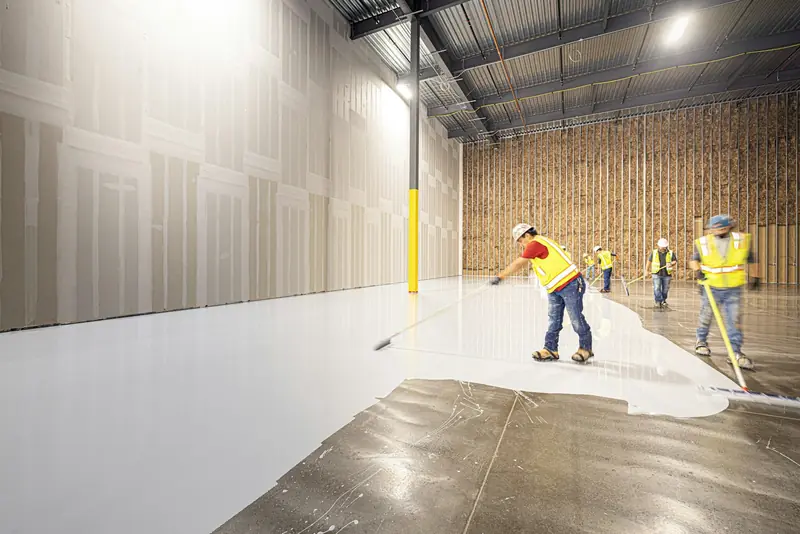
Two garage floors can look the same on install day and be completely different a couple of summers later. Almost all of that difference is in the prep and the install, which you cannot see once the topcoat is down. That is why the questions you ask up front matter. Here are nine to ask any epoxy or flake installer before you sign, us included.
1. Will you look at the slab before giving a final price?
A garage floor quote depends on the concrete, not just the square footage. Cracks, oil, old coatings, chipped edges, and moisture all change how much prep the job needs. Photos are a good way to start, and a starting number from photos is reasonable. A final price without anyone seeing the slab means the hard parts were guessed at. Ask what they need to see and when the number becomes firm. We start from photos and dimensions and confirm on a walk-through or photo review. The pricing page explains what moves the number.
2. Do you grind the floor or acid etch it?
This is the big one. Diamond grinding cuts the top of the slab open so the coating has something to grab. Acid etching is a chemical wash that roughens the surface less and does nothing for old coatings or heavy contamination. Etching can work in limited cases if the coating system allows it, but it is often where floors that fail later got their start. Ask which method they plan for your slab and why. Also ask how they control grinding dust, since nobody wants it all over the house. Our process page covers grind vs etch in more detail.
3. How will you handle cracks, oil, and old coatings?
Every slab has some of these. Ask what happens to each one. Cracks can be filled or kept as joints. Oil stains need degreasing and often more grinding. An old coating that is peeling has to come off before a new one goes down, and coating over it is asking for trouble. A good installer will name each problem they see and explain the fix. If the answer is that the coating will cover it all, ask again. Cover is not the same as fix.
4. Do you check for moisture?
Moisture coming up through a slab can push a coating off from underneath. It is easy to miss in a dry climate, but it still happens, especially near irrigation, on lower lots, or on newer slabs. Ask whether they check moisture and how. If moisture is a concern, ask what they would change: a different primer, a different system, or waiting longer on new concrete. You want to hear about it before the job, not after the floor starts bubbling. We include a moisture look in our inspection when the slab calls for it.
5. What goes into the system, layer by layer?
Ask the installer to walk you through every layer: the base coat, the flake broadcast if you want flake, and the clear topcoat. Ask what kind of topcoat they use and why it fits a garage that sees hot tires and open-door sun. Ask how much flake they broadcast, since a full broadcast looks and wears differently from a light sprinkle. You do not need to become an expert. You just want to know what you are paying for, so you can compare one estimate to another fairly. The flake floors page explains the layers in plain terms.
6. How does the St. George heat change the install?
Summer slabs here can get too hot to coat in the afternoon. Heat shortens working time and can cause problems if the coating goes on a radiating slab. Ask what time of day they work in summer, whether they check slab temperature, and what they do if the garage cannot stay shut while it cures. An installer who works here should have a plan for this without you asking. Our hot tires and UV page goes into the heat side of the job.
7. When can we walk on it and park on it?
Every system has its own cure times, and slab temperature and weather change them. Ask for the expected walk-on time and the time before cars can return, and ask what could change those times. Be wary of a single number that ignores the season. If you have a short term rental or a busy household, plan around the cure window ahead of time. Parking on a floor too soon, especially with hot tires after a summer drive, is one of the ways a good coating gets ruined.
8. What about the edges, stem walls, and apron?
Floors are not just the middle of the slab. Ask how they finish the edges along the walls, whether they coat the short stem walls or add a cove, and how they handle the garage door threshold. If you want the apron outside the door coated too, ask how they deal with direct sun out there. These details make the floor look finished, and they are often where estimates differ. Get them spelled out so there are no surprises when the crew packs up.
9. What goes in writing, and how do I care for it?
A written estimate should list the area, prep method, repairs, the system and its layers, flake blend, edge work, and the schedule. If any warranty is offered, get the terms on paper. Then ask how to clean the floor and what to avoid. Simple habits like sweeping grit, wiping up spills, and using mats under kickstands and jacks help any coating hold up. Ask what normal wear looks like near the open door, too, so a little change in the sun does not catch you off guard. A good installer will tell you the care steps without being asked.
Ask us all nine
We are glad to answer every one of these for your garage. Text 435-773-8856 with a wide photo of the floor, close-ups of cracks or old coating, the garage size, and your ZIP. We will tell you what prep we see and how we would handle it. You can also read our garage floors page and the epoxy FAQ for more short answers. We do not post prices, and estimates are free.
Questions
Is grinding better than acid etching for a garage floor?
Diamond grinding generally gives a stronger profile and handles old coatings and contamination better. Etching may suit limited cases if the system allows it.
Should an epoxy installer check for moisture?
Yes, when the slab calls for it. Moisture can push a coating off from below, and it can change which system goes down.
Can epoxy be installed in the summer in St. George?
Yes, with planning. Installers usually work in cooler parts of the day and check slab temperature, since a hot slab shortens working time.
How long before I can park on a new epoxy floor?
It depends on the system, slab temperature, and weather. Ask your installer for the walk-on and vehicle return times for your floor.
What should an epoxy floor estimate include?
The area, prep method, repairs, layers, flake blend, edge work, and schedule. Call or text 435-773-8856 for a free estimate.